
Proper Proportions: Why Some Spaces Just Feel Right
Clayton Vance · April 19, 2025 · 3 min read
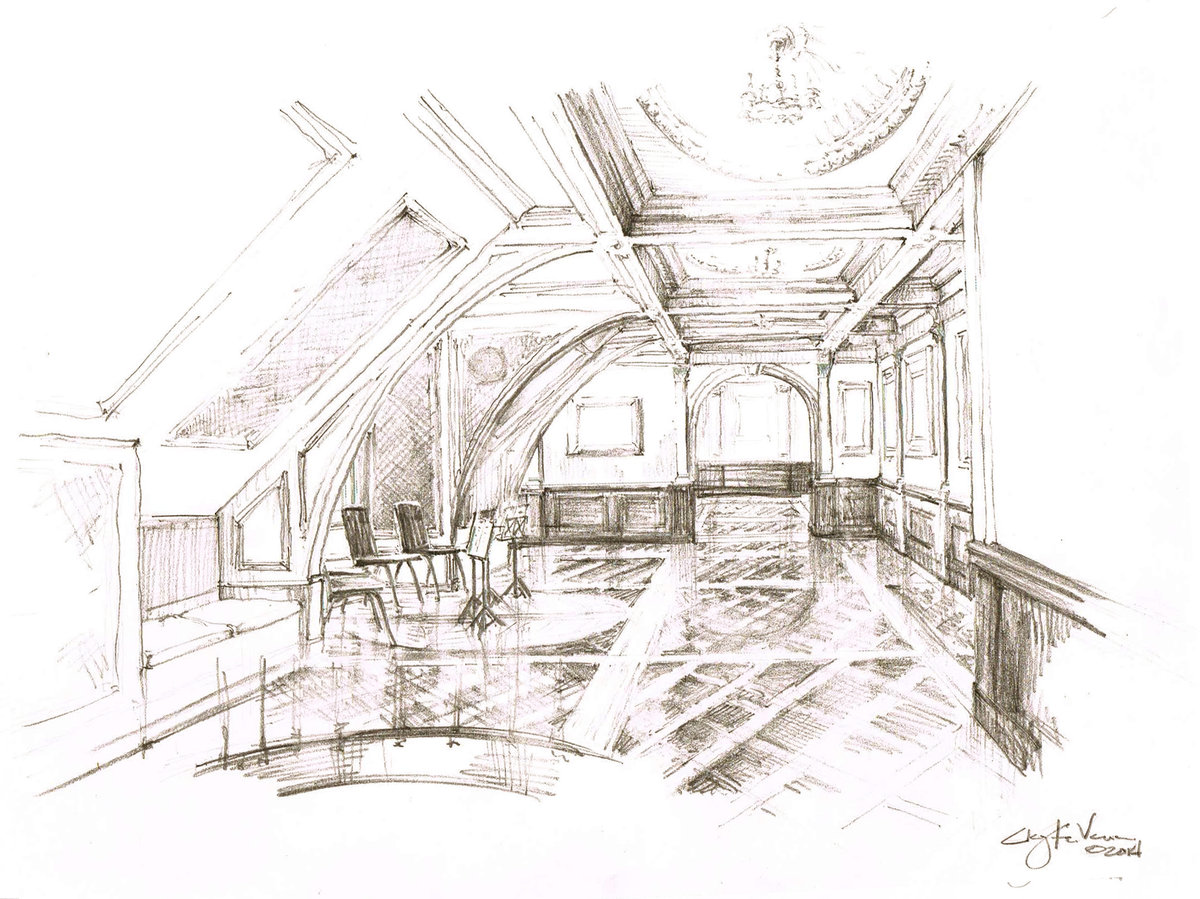
There's a moment you've probably experienced — when you walk into a room or look at a building and just feel it. It feels balanced. Composed. Settled. You can't always explain why, but you know something is right. That's the power of proportion.
Proportion Is the Language of Harmony
Proportion is not just about size or measurement. It's about relationship — how one part relates to another, and how both relate to the whole. It's not math for math's sake. It's about understanding how space and form communicate with our senses, and why some relationships feel elegant while others feel strained. Proportion is what makes a window feel generous rather than awkward. It's what makes a gable feel grounded instead of top-heavy. It's not decoration. It's design at its deepest level.
We All Feel Proportion — Even If We Don't Know It
You don't need a degree in architecture to recognize bad proportion. We all instinctively know when something feels off: a doorway that's too wide for its height, a roof that feels too heavy for the house it sits on, windows spaced without rhythm or alignment, columns that feel too spindly or cartoonishly thick. We might not know why a space feels wrong, but we feel it. And that feeling often comes down to broken proportion.
Vitruvius and the Foundation of Proportion
Marcus Vitruvius Pollio, a Roman architect of the 1st century BC, introduced the concept of symmetria in his treatise De Architectura — a harmonious relationship among parts of a structure, achieved through consistent modular measurements. Proportion is fundamentally human: we measure everything against ourselves. That's why spaces that reflect human dimensions feel better to inhabit.
Why We Get It Wrong Today
Modern construction often gets proportion wrong for three big reasons: efficiency is prioritized over elegance; details are chosen from catalogs rather than shaped by context; and we've lost visual memory — without consistent exposure to well-proportioned buildings, we stop knowing what "right" looks like. That's why so many new homes feel off, even when they're clean and well-built. They're made from disjointed parts, rather than grown from a coherent whole.
Final Thoughts: Beauty Has a Shape
You don't need to memorize ratios. You just need to train your eye and trust your instinct. Study buildings that feel right. Sketch them. Compare variations. Look at architecture the way you'd listen to music — with rhythm, tension, release, and harmony in mind. Because the difference between a space that works and one that sings almost always comes down to proportion. And once you start noticing it — you'll never unsee it.
Further Reading
Form Follows Function... Or Not...
Why purpose — not just function — should shape our buildings. On Sullivan, Le Corbusier, Vitruvius, and why a church door and an outhouse door should never look the same.
Why I Still Believe in Beauty
An introduction to what this space is about — and what's at stake. The kind of beauty that transcends time, and why we need to say out loud that it matters.